
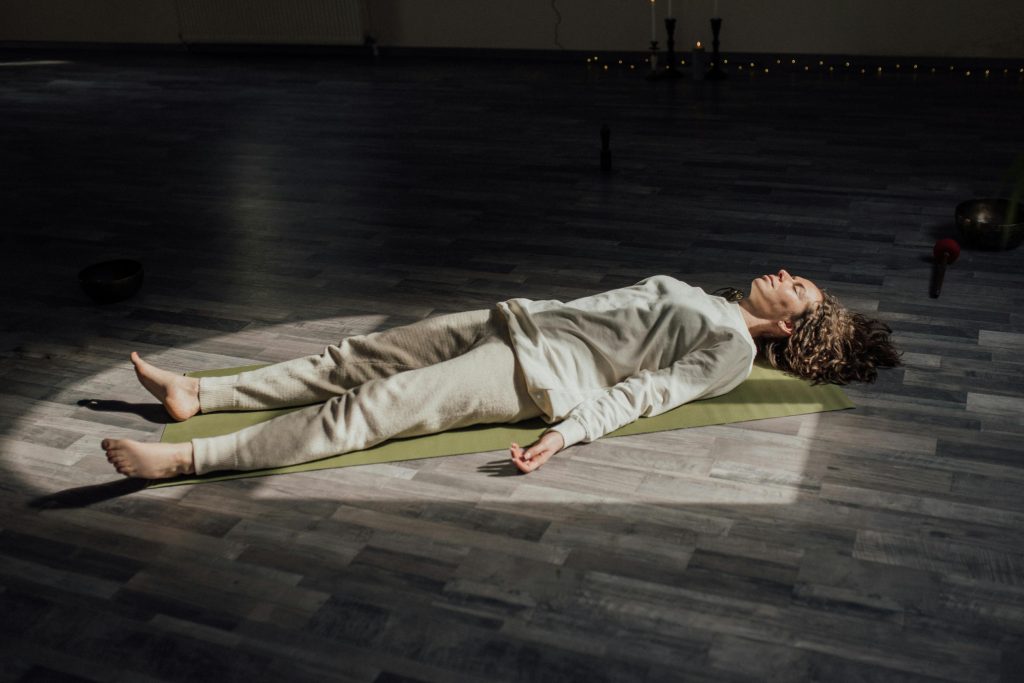
In our chronic sleep-deprived culture, where insomnia affects an estimated 30% of adults and sleep debt undermines cognitive function, mood, and metabolic health, Yoga Nidra — “yogic sleep” — offers a scientifically validated, pharmacologically free alternative to sleeping pills and fatigue management supplements. Ancient texts describe it as the threshold state between waking and sleeping consciousness; modern neuroscience calls it hypnagogia, and its effects on brainwave activity, stress hormones, and recovery markers are profound.
“In Yoga Nidra, we are not trying to become unconscious; we are trying to become more deeply conscious than ever before.” — Swami Satyananda Saraswati
What Exactly Is Yoga Nidra?
Yoga Nidra is a guided meditation practice performed in Savasana (lying down) in which the practitioner is systematically led through increasingly deep states of relaxation while maintaining a thread of awareness. Unlike regular sleep, where consciousness is absent, Yoga Nidra cultivates conscious awareness in the transitional state between waking (beta brainwaves) and deep sleep (delta brainwaves), passing through alpha and theta states. This transitional zone — the hypnagogic state — is neurologically unique: the body is in complete physiological rest while the mind remains subtly alert, making it the state most conducive to deep psychological integration, sankalpa (intention) work, and profound physical restoration.
The Neuroscience of Yogic Sleep
EEG (electroencephalography) studies of advanced Yoga Nidra practitioners reveal a distinctive brainwave signature. In normal wakefulness, the brain operates at 14–30 Hz (beta waves). In deep relaxation and early Yoga Nidra, it shifts to 8–13 Hz (alpha — present, relaxed awareness). As the practice deepens, theta waves (4–7 Hz) emerge — the same state accessed by experienced meditators and the stage most associated with insight, creativity, and deep emotional processing. During the deepest phases of Yoga Nidra, researchers observe brief delta wave (0.5–3 Hz) incursions — the same waves that characterise deep, dreamless sleep — while conscious awareness is maintained.
This is the basis for the traditional claim that one hour of Yoga Nidra equals approximately four hours of conventional sleep in restorative value. While this ratio is debated in research and likely varies significantly between individuals, physiological measures — including heart rate, respiratory rate, cortisol levels, and muscle tension — in deep Yoga Nidra closely approximate those observed in Stage 3–4 NREM sleep, supporting the claim that genuine physical restoration occurs during the practice.
The Five-Layer Body and Why It Works
Classical yogic anatomy describes the human being as composed of five sheaths (koshas) of increasingly subtle existence: the physical body (Annamaya kosha), the energy/breath body (Pranamaya kosha), the mental body (Manomaya kosha), the wisdom body (Vijnanamaya kosha), and the bliss body (Anandamaya kosha). Conventional sleep primarily restores the physical and energetic bodies. Yoga Nidra, according to this framework, reaches and restores all five layers simultaneously, including the deeper mental and wisdom bodies where psychological tension, unresolved emotion, and limiting beliefs are stored.
Modern trauma research supports a version of this understanding. Peter Levine’s somatic experiencing research and Bessel van der Kolk’s work on trauma and the body suggest that psychological trauma is stored somatically — in body tissue — and that deeply relaxed, body-aware states are necessary for its resolution. Yoga Nidra’s combination of deep somatic relaxation with maintained awareness may facilitate the processing of chronic psychological tension in ways inaccessible through conventional talk therapy or normal sleep.
The Structure of a Yoga Nidra Session
A standard Yoga Nidra session follows a consistent structure of 7 stages. Stage 1: Settling into Savasana and establishing physical comfort. Stage 2: Sankalpa (heartfelt intention) — a short, positive statement of purpose planted in the receptive subconscious. Stage 3: Rotation of consciousness through the body parts in a specific traditional sequence that systematically relaxes the motor cortex. Stage 4: Pairs of opposites — experiencing sensations like heaviness/lightness, warmth/cold — to engage the interoceptive cortex and deepen body awareness. Stage 5: Visualisation — movement through symbolic images that engage the imagination while the analytical mind rests. Stage 6: Return to Sankalpa. Stage 7: Externalisation — gentle guided return to full waking awareness. Total duration: 20–45 minutes.
Clinical Applications and Research
A 2019 randomised controlled trial published in the International Journal of Yoga found that 30-minute daily Yoga Nidra practice over 8 weeks significantly improved sleep quality (measured by Pittsburgh Sleep Quality Index), reduced anxiety and depression scores, and improved perceived stress in nursing professionals. A 2015 study from the All India Institute of Medical Sciences found Yoga Nidra reduced blood glucose, cortisol, and symptoms of menstrual irregularity in women with polycystic ovary syndrome (PCOS). The US Army has investigated Yoga Nidra as an intervention for combat-related PTSD, with promising preliminary results indicating significant reduction in PTSD severity scores, anxiety, and reported sleep disturbance.
How to Begin: A Simple Nightly Protocol
The most effective way to begin Yoga Nidra is with a guided audio recording. Lie down in a comfortable Savasana position — use a pillow under your knees for lower back support, an eye pillow to block light, and a blanket for warmth, as body temperature drops in deep relaxation. Choose a quality audio guide (there are excellent free recordings available from the Bihar School of Yoga and from Dr Richard Miller’s iRest protocol, which has been validated in clinical settings). Practise either mid-afternoon (3–5pm, when cortisol naturally dips) or in the evening 1–2 hours before sleep. Daily practice for 3 weeks is the minimum threshold to experience consistent, significant benefits.
For those suffering from chronic insomnia, anxiety, burnout, or post-illness fatigue, Yoga Nidra may be one of the most accessible and powerfully restorative tools available — requiring no flexibility, no prior yoga experience, and no equipment beyond a comfortable floor and 30 minutes of protected time.
Disclaimer: Yoga Nidra is not a substitute for medical treatment of sleep disorders. Consult a healthcare professional if you experience persistent insomnia.