
Advanced · 60 min
Ashtanga Primary Series: The Foundation of Strength, Discipline, and Inner Transformation
Among the many styles of yoga practiced around the world, Ashtanga Yoga stands out for its structured sequence, dynamic movement, and disciplined approach. Rooted in ancient yogic traditions and popularized by K. Pattabhi Jois, Ashtanga Yoga is a physically demanding yet deeply meditative practice that synchronizes breath with movement.
At the heart of this system lies the Ashtanga Primary Series, traditionally known as Yoga Chikitsa, which translates to “Yoga Therapy.” This foundational sequence is designed to detoxify the body, build strength, improve flexibility, and cultivate mental focus. More than just a physical workout, the Primary Series is a transformative journey that teaches discipline, patience, and self-awareness.
In this blog, we will explore the philosophy, structure, benefits, key poses, and significance of the Ashtanga Primary Series, along with practical guidance for beginners and experienced practitioners alike.
What Is the Ashtanga Primary Series?
The Ashtanga Primary Series is the first sequence in the traditional Ashtanga Yoga system. It consists of a fixed order of postures practiced in a continuous flow, linking each movement with controlled breathing.
Unlike many modern yoga classes where sequences vary daily, Ashtanga follows a precise structure. This repetition allows practitioners to deepen their understanding of each posture and track their physical and mental progress over time.
The Primary Series focuses mainly on:
- Detoxification
- Spinal alignment
- Building foundational strength
- Increasing flexibility
- Developing breath awareness
- Improving concentration
The practice combines movement, breath, and gaze to create a moving meditation.
The Philosophy Behind Ashtanga Yoga
The word “Ashtanga” comes from Sanskrit:
- “Ashta” meaning eight
- “Anga” meaning limbs
It refers to the Eight Limbs of Yoga described in the ancient text the Yoga Sutras of Patanjali. These eight limbs provide a complete path for spiritual development and self-realization.
They include:
- Yama – Ethical disciplines
- Niyama – Personal observances
- Asana – Physical postures
- Pranayama – Breath control
- Pratyahara – Withdrawal of senses
- Dharana – Concentration
- Dhyana – Meditation
- Samadhi – State of union or enlightenment
The physical practice of the Primary Series mainly focuses on the third limb, asana, while integrating breath and concentration practices that prepare the practitioner for deeper meditation.
Understanding the Structure of the Primary Series
The Ashtanga Primary Series follows a carefully organized progression of postures. Each pose prepares the body for the next, creating balance and flow throughout the practice.
The sequence generally includes:
1. Opening Chant and Centering
Practice traditionally begins with a Sanskrit chant that honors the lineage of teachers and helps cultivate focus and humility.
This opening ritual encourages practitioners to transition from daily distractions into mindful awareness.
2. Sun Salutations (Surya Namaskar)
The practice starts with dynamic warm-up sequences:
- Surya Namaskar A
- Surya Namaskar B
These flowing movements generate internal heat, awaken the muscles, and synchronize breath with movement.
Benefits include:
- Increased circulation
- Improved flexibility
- Enhanced concentration
- Breath awareness
3. Standing Postures
Standing poses build stability, strength, and grounding.
Common standing postures include:
- Padangusthasana
- Trikonasana
- Parsvakonasana
- Prasarita Padottanasana
- Virabhadrasana
These poses strengthen the legs, improve posture, and prepare the body for deeper forward folds and seated postures.
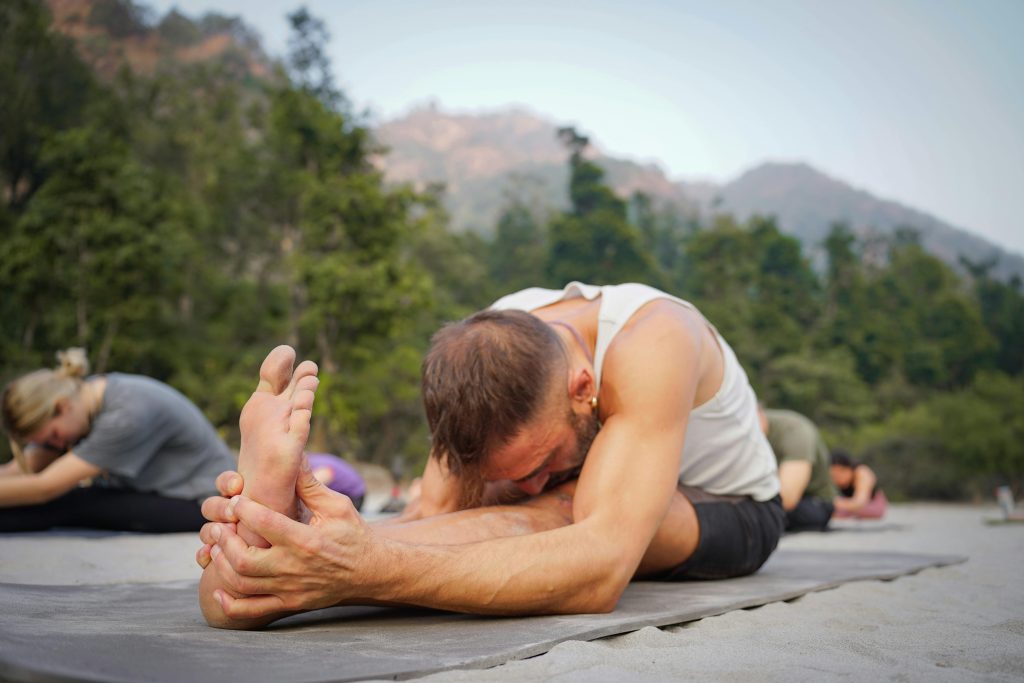
4. Seated Postures
The seated sequence forms the core of the Primary Series.
This section emphasizes:
- Hamstring flexibility
- Hip opening
- Spinal mobility
- Internal cleansing
Many poses involve forward bends and twists, which stimulate digestion and detoxification.
Examples include:
- Janu Sirsasana
- Marichyasana
- Navasana
- Bhujapidasana
- Kurmasana
These postures require patience and consistency, gradually opening the body over time.
5. Backbends
Backbends create balance after the intense forward-folding section.
The most important backbend in the series is:
- Urdhva Dhanurasana (Wheel Pose)
Backbends strengthen the spine, expand the chest, and energize the nervous system.
6. Finishing Sequence
The finishing sequence calms the body and integrates the effects of practice.
It includes:
- Shoulderstand
- Headstand
- Lotus variations
- Final relaxation (Savasana)
This final section promotes nervous system recovery and mental stillness.
The Importance of Breath in Ashtanga Yoga
Breath is one of the defining features of the Ashtanga system.
Practitioners use a breathing technique called Ujjayi Pranayama, often referred to as “victorious breath.”
This involves:
- Slow, controlled breathing
- Gentle constriction in the throat
- Deep inhalations and exhalations
The breath serves several purposes:
Creates Internal Heat
The continuous flow of breath generates warmth within the body, helping muscles stretch safely and supporting detoxification through sweat.
Maintains Focus
The breath acts as an anchor for the mind, reducing distractions and enhancing concentration.
Supports Movement
Every movement in the sequence is linked to either an inhale or exhale, creating rhythmic flow and mindfulness.
The Role of Drishti (Gaze)
Another key element of the Primary Series is drishti, or focused gaze.
Each posture has a designated focal point, such as:
- Nose
- Fingertips
- Toes
- Navel
Drishti helps:
- Improve concentration
- Develop balance
- Quiet mental distractions
Combined with breath and movement, drishti transforms the practice into meditation in motion.
Benefits of the Ashtanga Primary Series
The Primary Series offers numerous physical, mental, and emotional benefits.
1. Builds Strength
The repetitive flow develops:
- Core strength
- Arm strength
- Leg endurance
- Spinal stability
Many postures require bodyweight support, creating functional full-body strength.
2. Improves Flexibility
The sequence progressively opens:
- Hamstrings
- Hips
- Shoulders
- Spine
Flexibility develops gradually through repetition and consistent effort.
3. Enhances Discipline
Ashtanga Yoga encourages daily practice and personal commitment.
The structured sequence teaches:
- Patience
- Consistency
- Dedication
- Mental resilience
4. Detoxifies the Body
The combination of breath, movement, and heat stimulates circulation and sweating, which many practitioners associate with internal cleansing.
Twisting and compressive postures may also support digestion and organ function.
5. Reduces Stress
The meditative rhythm of movement and breath calms the nervous system and reduces mental chatter.
Many practitioners report:
- Improved mood
- Better sleep
- Reduced anxiety
- Greater emotional balance
6. Develops Body Awareness
The repetitive nature of the series helps practitioners notice subtle changes in:
- Posture
- Alignment
- Breathing patterns
- Emotional states
This awareness extends beyond the yoga mat into everyday life.
Challenges of the Primary Series
Although rewarding, the Ashtanga Primary Series can also be physically and mentally demanding.
Physical Intensity
The practice requires stamina, strength, and flexibility. Beginners may initially find the sequence overwhelming.
Repetition
Practicing the same sequence daily may feel repetitive for some students. However, repetition is central to the transformative nature of Ashtanga.
Each practice reveals new insights and areas for growth.
Ego and Comparison
Because Ashtanga can be physically advanced, practitioners sometimes compare themselves to others.
True progress comes not from achieving difficult poses but from cultivating awareness and humility.
Mysore Style Practice
One of the traditional ways of learning Ashtanga Yoga is through Mysore-style classes, named after the city of Mysore (now officially called Mysuru) in India where the practice gained worldwide recognition.
In Mysore-style practice:
- Students move at their own pace
- The teacher offers individual guidance
- Poses are learned gradually
- Emphasis is placed on self-practice
This method encourages independence and personal growth.
Tips for Beginners
Starting the Ashtanga Primary Series can feel intimidating, but gradual progress is key.
Start Slowly
You do not need to master the full sequence immediately.
Focus on:
- Breath awareness
- Proper alignment
- Consistency
Respect Your Body
Avoid forcing flexibility or advanced postures.
Yoga should challenge the body without causing pain or injury.
Practice Regularly
Even short daily sessions build strength and familiarity with the sequence.
Consistency matters more than intensity.
Learn from Qualified Teachers
An experienced instructor can provide:
- Alignment corrections
- Modifications
- Safe progression guidance
Be Patient
Progress in Ashtanga Yoga happens over months and years, not days.
The practice is a lifelong journey rather than a quick achievement.
The Spiritual Aspect of the Primary Series
While many people are initially drawn to Ashtanga Yoga for its physical benefits, the deeper purpose of the practice is inner transformation.
Through disciplined repetition, practitioners begin to observe:
- Mental habits
- Emotional reactions
- Patterns of resistance
- Ego-driven behavior
The mat becomes a mirror for self-awareness.
Over time, the practice develops qualities such as:
- Compassion
- Patience
- Humility
- Presence
The physical postures ultimately serve as tools for spiritual growth and self-discovery.
Ashtanga Yoga in Modern Life
In today’s fast-paced world, the structured nature of the Primary Series offers grounding and stability.
The practice creates a daily ritual that encourages:
- Mindfulness
- Physical health
- Emotional balance
- Self-discipline
For many practitioners, Ashtanga Yoga becomes more than exercise — it becomes a lifestyle centered around awareness and intentional living.
Conclusion
The Ashtanga Primary Series is a powerful and transformative yoga practice that combines strength, flexibility, breath, and concentration into a deeply meditative experience.
Known as Yoga Chikitsa, or yoga therapy, the series helps cleanse the body, calm the mind, and build inner resilience. Through its disciplined structure and flowing movement, practitioners cultivate not only physical fitness but also patience, focus, and self-awareness.
Although challenging, the Primary Series offers lifelong opportunities for growth and transformation. Each practice becomes a journey inward — revealing both limitations and potential while encouraging balance between effort and surrender.
Whether you are a beginner exploring yoga for the first time or an experienced practitioner deepening your discipline, the Ashtanga Primary Series provides a meaningful path toward strength, clarity, and inner harmony.